-
Thirteen studies presented on HDx therapy enabled by Theranova
adding to significantly growing global clinical evidence
-
Two telehealth studies highlighted reduced hospitalizations and
cost efficiencies for home PD patients using the Sharesource
remote patient management platform
SAN DIEGO--(BUSINESS WIRE)--
Baxter International Inc. (NYSE:BAX), a global innovator in renal care,
highlighted findings from HDx (expanded hemodialysis) and peritoneal
dialysis (PD) studies presented at the American Society of Nephrology
(ASN): Kidney Week, Oct. 23-28, showing how novel renal care
technologies are positively impacting patient care and clinic efficiency.
This press release features multimedia. View the full release here:
https://www.businesswire.com/news/home/20181029005720/en/
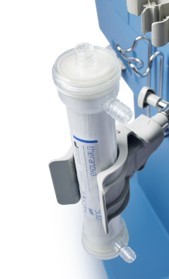
Baxter highlights fifteen studies presented at ASN: Kidney Week 2018 on HDx therapy enabled by Theranova and Sharesource remote patient management, adding to significantly growing global clinical evidence (Photo: Business Wire)
The global HDx therapy enabled by Theranova studies include new
data on key patient treatment measures that show stable albumin levels,
significant reduction of large-middle molecules, and a statistically
significant increase in health-related quality of life. Studies
conducted on Baxter’s Sharesource remote patient management
(telehealth) platform when used with automated PD (APD) therapy report a
statistically significant reduction in patient hospitalizations and cost
efficiencies.
“Realizing the best possible outcomes for dialysis patients means
understanding the full potential of emerging technologies and therapies,
then balancing them with good clinical management,” said Colin
Hutchison, M.D., Medical Director at Hawke’s Bay District Health Board,
New Zealand, and author of two HDx abstracts presented at Kidney Week.
“My ongoing research with HDx therapy is helping me and other
nephrologists make well-informed decisions about how to evolve treatment
for our patients.”
Growing Clinical Data on HDx Therapy
Baxter’s HDx therapy enabled by Theranova was designed to filter
a wider range of molecules from the blood compared to conventional
hemodialysis filters, including mid-sized molecular weight uremic toxins
that may be associated with inflammation and cardiovascular health for
end-stage renal disease (ESRD) patients1, 2, 3. By extending
the range of molecules that can be filtered from the blood, HDx results
in a clearance profile that more closely mimics the natural kidney4,
5.
In Dr. Hutchison’s first study, he examined the safety and efficacy of
HDx therapy over six months (Abstract #TH-PO353). The primary outcome
indicated a clinically insignificant change (2.9 percent) in albumin
levels from the start of the study through six months. Albumin is one of
the most important proteins in the body, and a lower serum albumin level
has been associated with mortality6 .A sustained,
unexplained reduction in albumin (>25%) was not observed in any
participant, and secondary outcomes indicated functional and nutritional
assessments were stable. The study was a single-arm, multi-center device
study that included 87 chronic patients; Dr. Hutchison plans additional
studies to assess the full impact of HDx on long-term patient outcomes.
In a second study assessing albumin levels of chronic patients on HDx
therapy (Abstract #SA-PO900), Dr. Hutchison found HDx therapy did not
result in significant change in pre-dialysis serum albumin
concentrations over six months. Of interest, the study also reported 50
percent of the population received a reduced dose of erythropoietin,
which most dialysis patients receive to combat anemia.
Additional HDx data presented included a health-related quality of life
study that found about a 50 percent reduction in the diagnosis of
restless leg syndrome, a common problem for dialysis patients that
results in uncomfortable feelings in their legs (Abstract #TH-PO296).
The study involved 666 patients over six months and was conducted across
12 Baxter clinics in Colombia. Another six-month study from Italy
provided data that HDx may reduce pre-dialysis levels of middle
molecules and the inflammation marker C-reactive protein, with effects
becoming apparent after three months of treatment (Abstract #TH-PO357).
New Data on Telehealth Platform for PD
Sharesource allows healthcare providers to securely view their
patients’ recently completed home dialysis-related treatment data that
is automatically collected after each PD session. Healthcare providers
can then act on this information by remotely adjusting their patients’
home device settings without requiring them to make additional trips to
the clinic.
New data on remote patient management indicated statistically
significant reduced hospitalization for home patients using Baxter’s Sharesource
telehealth platform with an APD system (Abstract #FR-PO683). While many
factors contribute to these findings, it is believed remote patient
management technology helps support greater communication between
patients and their healthcare providers, which can improve adherence to
treatment and identify potential complications before they become
serious. The retrospective study evaluated 90 patients using remote
patient management with an APD system, in comparison to 864 patients
without the telehealth technology across 46 Baxter clinics in Colombia.
A second study on remote patient management used an analytical model to
estimate how the telehealth platform may impact overall health system
costs for PD care in Colombia (Abstract #FR-PO685). The model was based
on retrospective data pulled from patient-level registries and medical
records and included rates of hospitalization, peritonitis, technique
failure and mortality. In the model, remote patient management generated
overall savings of approximately $16,000 USD per patient; avoided 25
hospitalization episodes and 243 hospital days; and prevented 17
peritonitis episodes, among others. A sensitivity analysis showed that
the model had a 66 percent accuracy rate.
To read the full abstracts for these and other HDx and remote patient
management studies presented during Kidney Week, please refer to the Journal
of the American Society of Nephrology: Kidney Week Edition.
HDx enabled by Theranova
is available in Asia, Canada, Europe and select Latin America markets. Theranova
is an investigational device in the United States, and is not available
for commercial sale in that market.
The Sharesource
remote patient management platform is available with the Amia APD
system in the United States and Canada, and is currently being used by
more than 5,000 ESRD patients to manage therapy. Sharesource is
also available outside the United States with Baxter’s HomeChoice
Claria APD system in Asia, Europe and Latin America, and with the Kaguya
APD system in Japan.
About Baxter
Every day, millions of patients and caregivers rely on Baxter’s leading
portfolio of critical care, nutrition, renal, hospital and surgical
products. For more than 85 years, we’ve been operating at the critical
intersection where innovations that save and sustain lives meet the
healthcare providers that make it happen. With products, technologies
and therapies available in more than 100 countries, Baxter’s employees
worldwide are now building upon the company’s rich heritage of medical
breakthroughs to advance the next generation of transformative
healthcare innovations. To learn more, visit www.baxter.com and
follow us on Twitter, LinkedIn and Facebook.
Rx Only. For safe and proper use of the devices mentioned
herein, refer to the Theranova Instructions for Use.
This release includes forward-looking statements concerning HDx
enabled by Theranova, one of Baxter’s dialysis membranes, and Sharesource
remote patient management including expectations regarding their
potential impact on patients and anticipated benefits associated with
their use. The statements are based on assumptions about many important
factors, including the following, which could cause actual results to
differ materially from those in the forward-looking statements:
satisfaction of regulatory and other requirements; actions of regulatory
bodies and other governmental authorities; product quality,
manufacturing or supply, or patient safety issues; changes in law and
regulations; and other risks identified in Baxter's most recent filing
on Form 10-K and other SEC filings, all of which are available on
Baxter's website. Baxter does not undertake to update its
forward-looking statements.
Baxter, Theranova, Sharesource, Amia, HomeChoice Claria and Kaguya
are registered trademarks of Baxter International Inc.
1 Wolley et al. Exploring the Clinical Relevance of Providing
Increased Removal of Large Middle Molecules. Clin J Am Soc Nephrol.
2018;13:805-814.
2 Neirynck N, et al. An update on
uremic toxins. Int Urol Nephrol. 2013; 45:139-50.
3
Duranton F, et al. European Uremic Toxin Work Group. Normal and
pathologic concentrations of uremic toxins. J Am Soc Nephrol. 2012
Jul;23(7):1258-70.
4 Boschetti-de-Fierro A, et al. MCO
membranes: Enhanced Selectivity in High-Flux Class. Scientific Reports
(2015); 5: 18448.
5 Kirsch AH, et al. Performance of
hemodialysis with novel medium cut-off dialyzers. Nephrol Dial
Transplant. 2017;32:165-172.
6Mehrotra
R1, Duong
U, Jiwakanon
S, Kovesdy
CP, Moran
J, Kopple
JD, Kalantar-Zadeh
K Serum albumin as a predictor of mortality in peritoneal dialysis:
comparisons with hemodialysis. Am
J Kidney Dis. (2011) 58:418-28.

View source version on businesswire.com:
https://www.businesswire.com/news/home/20181029005720/en/
Baxter International Inc.
Media Contact
Jill Carey-Hargrave,
(224) 948-5353
media@baxter.com
or
Investor
Contact
Clare Trachtman, (224) 948-3085
Source: Baxter International Inc.